Eklectus.
Eklectus.
Extending play-based therapy
into a secure digital environment.
Extending play-based therapy
into a secure digital environment.
Extending play-based therapy
into a secure digital environment.
Project at a glance
Project at a glance
Project at a glance
New Day Psychological Services asked DEFI to explore how therapists working with children and teens could preserve the value of play when sessions moved online—at the same moment that reimbursement policies and family expectations were changing the market. The work progressed from validation and product strategy through interaction design, technical platform selection, and MVP development.
New Day Psychological Services asked DEFI to explore how therapists working with children and teens could preserve the value of play when sessions moved online—at the same moment that reimbursement policies and family expectations were changing the market. The work progressed from validation and product strategy through interaction design, technical platform selection, and MVP development.
New Day Psychological Services asked DEFI to explore how therapists working with children and teens could preserve the value of play when sessions moved online—at the same moment that reimbursement policies and family expectations were changing the market. The work progressed from validation and product strategy through interaction design, technical platform selection, and MVP development.
Contribution: Stakeholder interviews, market research, survey design and analysis, business and product strategy, therapeutic game and interface design, therapist-control concepts, technical evaluation, and prototype development. Outcome: A validated market opportunity and a functional, Unity-based MVP combining remote therapeutic play with secure, HIPAA-compliant video communication.
Contribution: Stakeholder interviews, market research, survey design and analysis, business and product strategy, therapeutic game and interface design, therapist-control concepts, technical evaluation, and prototype development. Outcome: A validated market opportunity and a functional, Unity-based MVP combining remote therapeutic play with secure, HIPAA-compliant video communication.
Contribution: Stakeholder interviews, market research, survey design and analysis, business and product strategy, therapeutic game and interface design, therapist-control concepts, technical evaluation, and prototype development. Outcome: A validated market opportunity and a functional, Unity-based MVP combining remote therapeutic play with secure, HIPAA-compliant video communication.
Bringing an essential therapeutic tool online.
Bringing an essential therapeutic tool online.
Bringing an essential therapeutic tool online.
Therapists frequently use games with children to lower pressure and make a session feel less clinical. Shared play helps children relax, encourages conversation, and creates natural openings for therapists to introduce the vocabulary children need to describe feelings, experiences, and concerns. When therapy moved online, those familiar physical tools were difficult to share through an ordinary video call. Eklectus was conceived as a shared digital activity rather than a simple online board game: an environment where therapist and child could play together from different locations while the conversation and therapeutic purpose remained central.
Therapists frequently use games with children to lower pressure and make a session feel less clinical. Shared play helps children relax, encourages conversation, and creates natural openings for therapists to introduce the vocabulary children need to describe feelings, experiences, and concerns. When therapy moved online, those familiar physical tools were difficult to share through an ordinary video call. Eklectus was conceived as a shared digital activity rather than a simple online board game: an environment where therapist and child could play together from different locations while the conversation and therapeutic purpose remained central.
Therapists frequently use games with children to lower pressure and make a session feel less clinical. Shared play helps children relax, encourages conversation, and creates natural openings for therapists to introduce the vocabulary children need to describe feelings, experiences, and concerns. When therapy moved online, those familiar physical tools were difficult to share through an ordinary video call. Eklectus was conceived as a shared digital activity rather than a simple online board game: an environment where therapist and child could play together from different locations while the conversation and therapeutic purpose remained central.
A marketplace changed by necessity.
A marketplace changed by necessity.
A marketplace changed by necessity.
Before COVID-19, insurance reimbursement often made online child therapy the exception rather than the routine. The pandemic forced care online and expanded reimbursement. Parents also discovered the value of avoiding the commute, waiting room, and scheduling burden surrounding an appointment. When in-person care returned, many families did not want to surrender that convenience. Remote therapy had become a lasting service model, creating demand for purpose-built tools that could offer more than a conventional video call.
Before COVID-19, insurance reimbursement often made online child therapy the exception rather than the routine. The pandemic forced care online and expanded reimbursement. Parents also discovered the value of avoiding the commute, waiting room, and scheduling burden surrounding an appointment. When in-person care returned, many families did not want to surrender that convenience. Remote therapy had become a lasting service model, creating demand for purpose-built tools that could offer more than a conventional video call.
Before COVID-19, insurance reimbursement often made online child therapy the exception rather than the routine. The pandemic forced care online and expanded reimbursement. Parents also discovered the value of avoiding the commute, waiting room, and scheduling burden surrounding an appointment. When in-person care returned, many families did not want to surrender that convenience. Remote therapy had become a lasting service model, creating demand for purpose-built tools that could offer more than a conventional video call.


Research before requirements.
Research before requirements.
Research before requirements.
DEFI began with interviews involving New Day, practicing therapists, and people familiar with adjacent healthcare markets. The work focused on four questions: Was the opportunity real? What did therapists need as service delivery shifted? What would help remote sessions approach the value of face-to-face care? Which technical tools could support development and delivery? DEFI then designed, distributed, and analyzed a broader market survey. The findings validated demand, clarified the value proposition, and shaped the business positioning, product roadmap, and technical direction before major development decisions were made.
DEFI began with interviews involving New Day, practicing therapists, and people familiar with adjacent healthcare markets. The work focused on four questions: Was the opportunity real? What did therapists need as service delivery shifted? What would help remote sessions approach the value of face-to-face care? Which technical tools could support development and delivery? DEFI then designed, distributed, and analyzed a broader market survey. The findings validated demand, clarified the value proposition, and shaped the business positioning, product roadmap, and technical direction before major development decisions were made.
DEFI began with interviews involving New Day, practicing therapists, and people familiar with adjacent healthcare markets. The work focused on four questions: Was the opportunity real? What did therapists need as service delivery shifted? What would help remote sessions approach the value of face-to-face care? Which technical tools could support development and delivery? DEFI then designed, distributed, and analyzed a broader market survey. The findings validated demand, clarified the value proposition, and shaped the business positioning, product roadmap, and technical direction before major development decisions were made.
Giving the therapist a hand on the controls.
Giving the therapist a hand on the controls.
Giving the therapist a hand on the controls.
A conventional digital game follows fixed rules. A therapeutic game must respond to the needs of a particular child and the objectives of a particular session. Eklectus introduced behind-the-scenes “Wizard of Oz” controls that allowed the therapist to influence the course of play and its rewards without interrupting the child’s experience. The therapist could reinforce participation, encourage a behavior, open a path to further conversation, or help a child practice language for difficult subjects. The child experienced a natural game while the clinician retained the ability to guide it toward a useful therapeutic outcome.
A conventional digital game follows fixed rules. A therapeutic game must respond to the needs of a particular child and the objectives of a particular session. Eklectus introduced behind-the-scenes “Wizard of Oz” controls that allowed the therapist to influence the course of play and its rewards without interrupting the child’s experience. The therapist could reinforce participation, encourage a behavior, open a path to further conversation, or help a child practice language for difficult subjects. The child experienced a natural game while the clinician retained the ability to guide it toward a useful therapeutic outcome.
A conventional digital game follows fixed rules. A therapeutic game must respond to the needs of a particular child and the objectives of a particular session. Eklectus introduced behind-the-scenes “Wizard of Oz” controls that allowed the therapist to influence the course of play and its rewards without interrupting the child’s experience. The therapist could reinforce participation, encourage a behavior, open a path to further conversation, or help a child practice language for difficult subjects. The child experienced a natural game while the clinician retained the ability to guide it toward a useful therapeutic outcome.

Redesigning play for the screen.
Redesigning play for the screen.
Redesigning play for the screen.
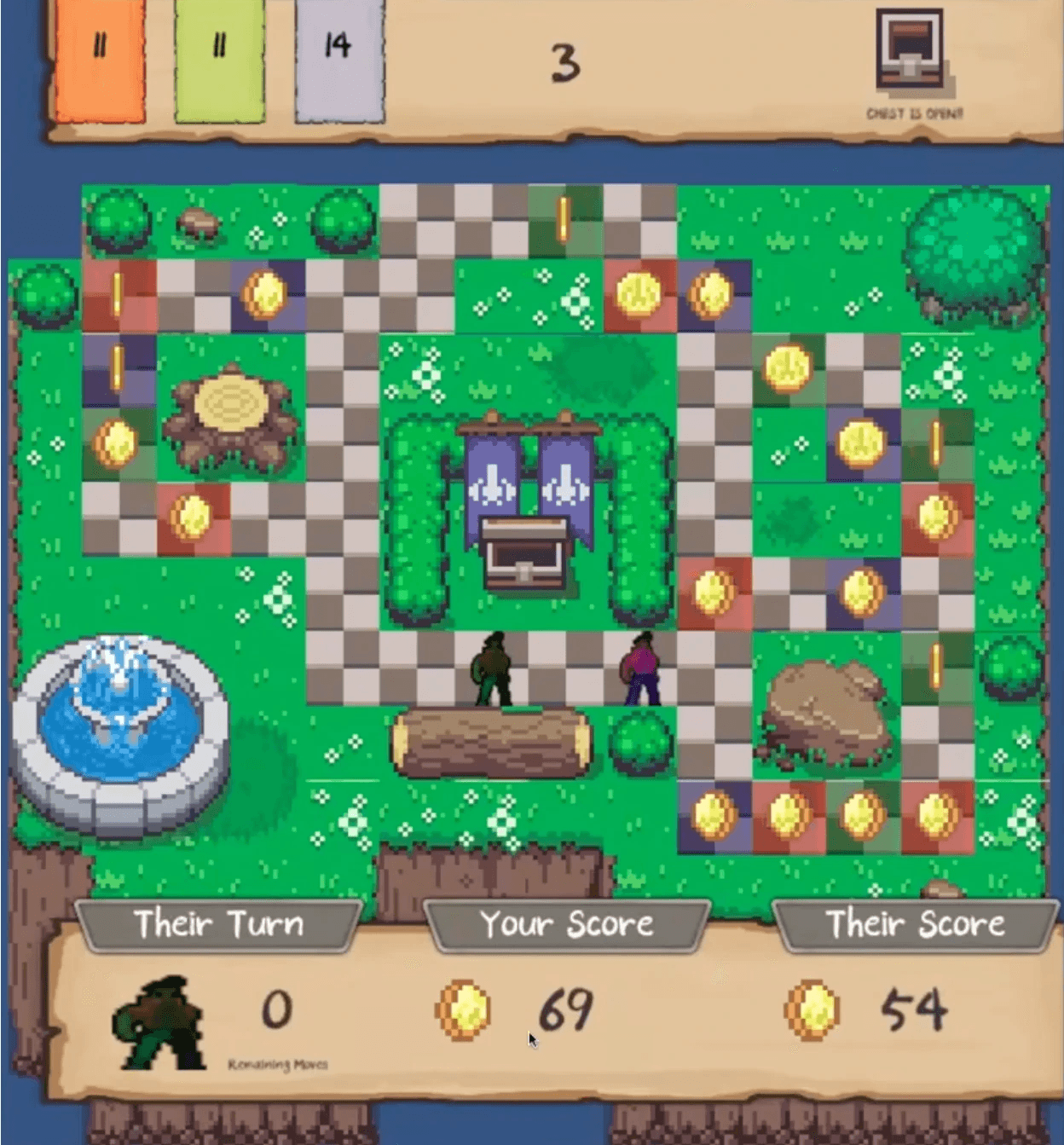
The physical game could not simply be copied onto a monitor. Its board, card decks, scoring pieces, and shared point of view all had to be reconsidered for two people participating from different locations. The final experience became a shared 2-D playing field where players control animated avatars, roll digital dice, and move freely through the environment. Interactive cards and on-screen prompts preserve the back-and-forth rhythm of play, while turn indicators, remaining moves, collected coins, automated scoring, and visible progress keep both participants oriented. Keeping choices and responses in the child’s hands maintains the sense of active play rather than turning the session into a passive screen experience—giving the therapist natural opportunities to open conversation, reinforce participation, and guide the interaction.
The physical game could not simply be copied onto a monitor. Its board, card decks, scoring pieces, and shared point of view all had to be reconsidered for two people participating from different locations. The final experience became a shared 2-D playing field where players control animated avatars, roll digital dice, and move freely through the environment. Interactive cards and on-screen prompts preserve the back-and-forth rhythm of play, while turn indicators, remaining moves, collected coins, automated scoring, and visible progress keep both participants oriented. Keeping choices and responses in the child’s hands maintains the sense of active play rather than turning the session into a passive screen experience—giving the therapist natural opportunities to open conversation, reinforce participation, and guide the interaction.
The physical game could not simply be copied onto a monitor. Its board, card decks, scoring pieces, and shared point of view all had to be reconsidered for two people participating from different locations. The final experience became a shared 2-D playing field where players control animated avatars, roll digital dice, and move freely through the environment. Interactive cards and on-screen prompts preserve the back-and-forth rhythm of play, while turn indicators, remaining moves, collected coins, automated scoring, and visible progress keep both participants oriented. Keeping choices and responses in the child’s hands maintains the sense of active play rather than turning the session into a passive screen experience—giving the therapist natural opportunities to open conversation, reinforce participation, and guide the interaction.

An MVP built to answer the next questions.
An MVP built to answer the next questions.
An MVP built to answer the next questions.
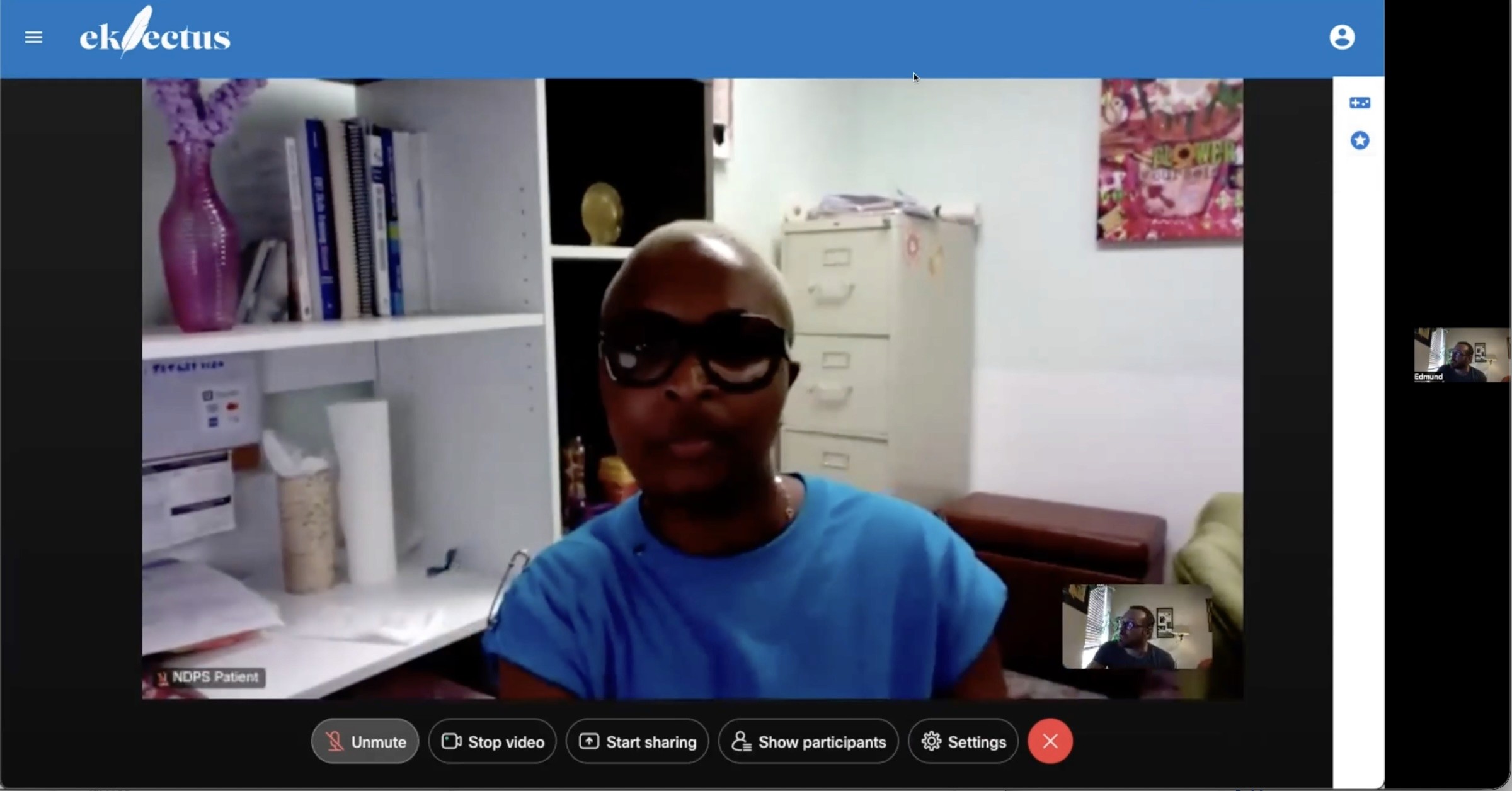
Unity was selected after evaluating other game engines because it balanced capability, cost, industry adoption, and access to experienced development talent. Photon supported the early multiplayer game architecture, while secure Webex technology supplied HIPAA-compliant video communication without requiring a separate telehealth stack to be built from the ground up. The MVP demonstrated the shared game environment and successfully supported multiple concurrent test sessions. It was intentionally scoped to validate the product concept and core workflows rather than serve as a finished production system. Database-backed authentication, user administration, persistent data, monitoring, and automatic scaling remained part of the next investment stage. That distinction gave New Day a useful outcome: a tangible platform for evaluation and fundraising, along with a clearer map of what would be required for secure commercial deployment.
Unity was selected after evaluating other game engines because it balanced capability, cost, industry adoption, and access to experienced development talent. Photon supported the early multiplayer game architecture, while secure Webex technology supplied HIPAA-compliant video communication without requiring a separate telehealth stack to be built from the ground up. The MVP demonstrated the shared game environment and successfully supported multiple concurrent test sessions. It was intentionally scoped to validate the product concept and core workflows rather than serve as a finished production system. Database-backed authentication, user administration, persistent data, monitoring, and automatic scaling remained part of the next investment stage. That distinction gave New Day a useful outcome: a tangible platform for evaluation and fundraising, along with a clearer map of what would be required for secure commercial deployment.
Unity was selected after evaluating other game engines because it balanced capability, cost, industry adoption, and access to experienced development talent. Photon supported the early multiplayer game architecture, while secure Webex technology supplied HIPAA-compliant video communication without requiring a separate telehealth stack to be built from the ground up. The MVP demonstrated the shared game environment and successfully supported multiple concurrent test sessions. It was intentionally scoped to validate the product concept and core workflows rather than serve as a finished production system. Database-backed authentication, user administration, persistent data, monitoring, and automatic scaling remained part of the next investment stage. That distinction gave New Day a useful outcome: a tangible platform for evaluation and fundraising, along with a clearer map of what would be required for secure commercial deployment.